🔥 Money & Machines |
We deeply understand that your primary reason for buying The Head and Tale's subscription is because you share our belief in independent, unbiased and truth-driven journalism. |
So, while putting together our Money & Machines newsletter today we like most other media organisations this week could not ignore the shocking news of the mass layoffs at The Washington Post. |
So in this edition of the newsletter we reflect on its journey from its explosive breaking news on what came to be known as the Watergate scandal in the 1970s to drawing investment from Amazon’s Jeff Bezos in 2013 and the recent mass newsroom layoffs, and what it means to the industry as a whole. |
Watergate's legacy meets the scarcity of money and the rise of AI |
On August 8, 1974, Richard Nixon became the first US President to resign from office. Decades later, he still holds that notorious distinction, despite having occupied the most powerful political position in the world. |
His downfall was triggered not by political defeat, but by reporting that emerged from the investigation of a political scandal by two rigorous and fearless journalists, Bob Woodward and Carl Bernstein, at The Washington Post, a near 150-year-old newspaper. |
Since then, The Post, as it is locally known, has come to represent the highest ideals of investigative journalism globally. For generations, it stood as a reminder that newsrooms are not merely chroniclers of events, but institutions capable of questioning power, documenting wrongdoing and serving public interest even when it is inconvenient. The scandal, which later came to be known as Watergate, has since come to symbolise journalism at its most consequential. |
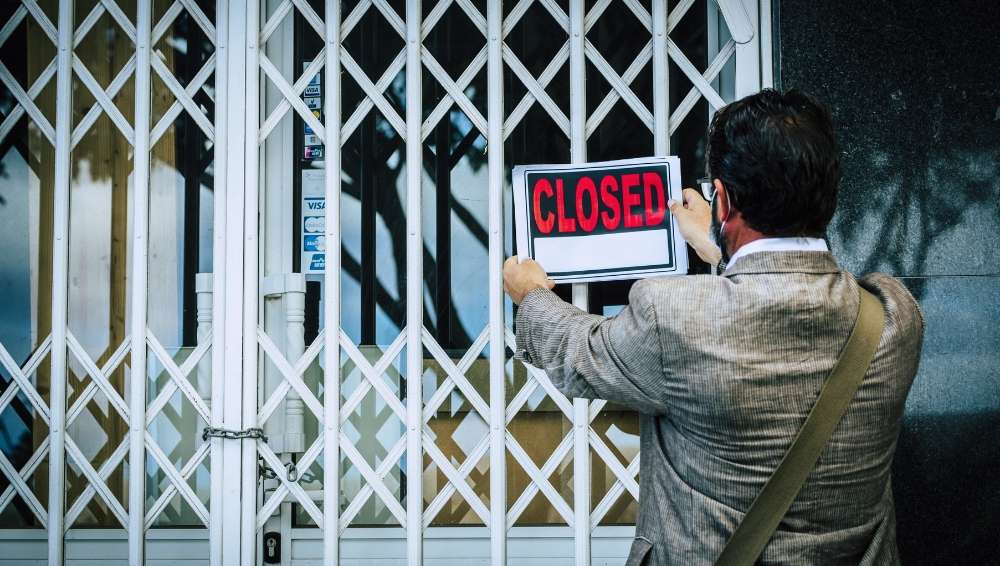
So, when The Post announced mass layoffs in its newsroom earlier this week, it sent shockwaves across the media industry. The decision comes at a time when the newspaper business is already grappling with long-term disruption caused by digital platforms and pressures that are now being intensified further by the rapid emergence of AI in news production and distribution. |
Marty Baron, The Post’s former executive editor, described the layoffs as “among the darkest days in the history of one of the world’s greatest news organizations.” |
Among those laid off was The Washington Post columnist Ishaan Tharoor, son of popular Indian politician Shashi Tharoor, who said on X that he was “heartbroken.” |
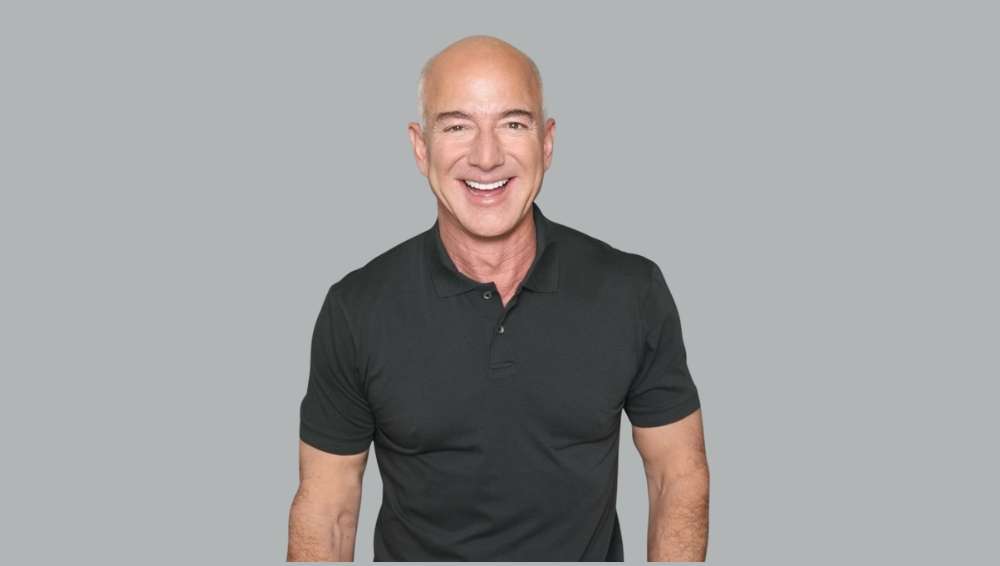
The layoffs have drawn widespread criticism, particularly because Amazon founder Jeff Bezos had acquired The Washington Post in 2013 for $250 million, promising to usher in a “golden era” for the newspaper. For many observers, the current cuts echo the series of buyouts that reduced the newsroom’s size significantly in the decade leading up to Bezos’ acquisition. |
But the pain this time is searing. Because it marks not just another round of newsroom cuts, but a moment that forces uncomfortable questions about how even institutions built on investigative legacy are being reshaped by shifting political and economic realities. |
When Jeff Bezos acquired The Washington Post in 2013, the move was widely seen as a rescue. At a time when print revenues were collapsing and legacy newspapers across the US were shrinking, Bezos positioned himself as a patient owner willing to invest in journalism for the long term. Under his ownership, The Post expanded its newsroom, invested in digital infrastructure and scaled its subscription business. For a time, the strategy appeared to work. |
The Post’s editorial posture during Donald Trump’s presidency reinforced that perception. It adopted the now-famous slogan “Democracy Dies in Darkness,” signalling a renewed commitment to watchdog journalism at a time when media credibility itself was under political attack. Its reporting, fact-checking and investigative coverage frequently placed it in direct confrontation with the Trump administration, reinforcing its image as a newsroom willing to challenge power. |
But the years that followed suggested a gradual recalibration. |
As Trump left office, the subscription surge that had fuelled newsroom expansion began to slow. Digital media economics tightened, advertising revenues fragmented and audience growth plateaued. Around the same time, observers noted subtle shifts in institutional messaging. Critics pointed to the newspaper stepping back from explicitly endorsing Vice President Kamala Harris, a move some observers said alienated sections of its subscriber base. |
Bezos’ own engagement with political power has also drawn scrutiny in recent years. “Bezos is not trying to save The Washington Post. He's trying to survive Donald Trump,” former Post fact-checker Glenn Kessler wrote in a column. |
The irony is difficult to ignore. A newspaper that helped expose one of the most consequential political scandals in modern history now finds itself navigating an era where ownership, business pressures and political environments are increasingly intertwined. |
At this point, cynics would argue that investing money into a loss-making media organisation makes little financial sense, especially at a time when AI has drastically reduced the cost of producing information. News summaries, commentary and analysis can now be generated at scale, often within seconds, making journalism appear slow, expensive and difficult to scale in comparison. So, Bezos cannot be held responsible for the layoffs, cynics would argue. |
But journalism is inherently more nuanced and humane. AI can synthesise information, but it cannot independently verify it, build confidential source networks or report from courtrooms, political rallies and conflict zones. The core currency of journalism has never been information alone; it has been trust, verification and proximity to ground realities. |
In fact, the proliferation of AI-generated content may make journalism more essential, not less. As information becomes cheaper and easier to manipulate, audiences are likely to place greater value on institutions capable of verifying authenticity. |
So, the real question is how do we sustain independent and unbiased media institutions in the age of AI, when financing such businesses is becoming increasingly scarce. The answer certainly does not lie in investors like Bezos who, despite his financial heft, appears willing to bend before the theatrics of a false “Fake News” advocator. |
Media needs investors who are pragmatic enough to understand that journalism will not deliver the kind of returns that fund vanity space trips. Instead, it requires backers who recognise that their capital can help sustain institutions capable of forcing the most powerful men in the world like Nixon to relinquish power when people come to realise that they were never worthy of holding it. |
This is also a reminder how corporate ownership and advertising pressures are reshaping modern media be it in the US or India — making journalism that answers first to informed readers all the more significant. |
-by Joseph Rai |










![[Update]: LazyPay clarifies buy-now-pay-later service halt to merchants](/upload/theheadandtale.com/2024/11/1731475589_lazypay.jpg)