
Disseqt AI raises pre-Series A funding from Gresham House Ventures, Rahul Dravid, others
 2 min read
AI governance and assurance startup Disseqt AI has raised $8 million in a pre-Series A funding round led by Gresham House Ventures.
The round also saw participation from existing investor Sure Valley Ventures (SVV), Delta Partners and Enterprise Ireland. Angel investors included senior executives from OpenAI, Palo Alto Networks, Salesforce and Meta, along with former Indian cricket captain Rahul Dravid, who invested in his individual capacity.
The fresh capital will be used to expand the company's global enterprise customer base and strengthen its sales, operations and technology teams in India.
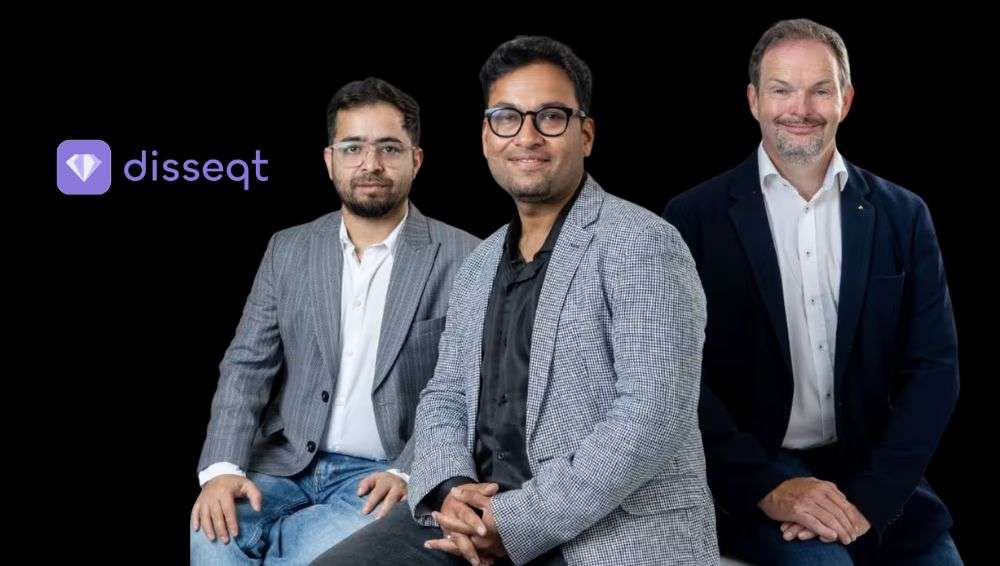
Founded in late 2025 by Apoorva Kumar, Manish Atri and Cyril Treacy, Disseqt AI develops an AI governance and assurance platform for enterprises. Its technology helps businesses test, monitor and govern AI applications and autonomous agents.
The platform enables companies to identify vulnerabilities in AI agents before deployment, enforce organisational policies after deployment and continuously monitor their behaviour. It also helps prevent AI systems from generating outputs that violate company policies while maintaining audit trails for compliance and oversight.
Disseqt AI said its platform has been deployed across multiple enterprise use cases. In one project involving a global sports league's fan engagement agent serving 80 million fans, the company improved the safe-response rate from 80% to 99% across tests covering safety, bias and privacy risks. It also provides assurance services for a credit card services programme at a large European bank.
The global AI governance market was valued at $248.99 million in 2025 and is projected to be worth $351.73 million in 2026 and reach $2,140.82 million by 2034, according to a report by market intelligence firm Fortune Business Insights, exhibiting a CAGR of 25.30% during the forecast period. The market is driven by increasing regulatory compliance and the growing demand for transparency and trust in AI systems, it said.