
UPI went viral, but the Gandhi Note stays.
While India has spent a decade trying to make money move without paper, the face of Gandhi on the currency note remains as relevant as ever.
 7 min read
Today is Mahatma Gandhi’s 157th birth anniversary. On the same day, traders in parts of the country had planned to observe October 2 as a ‘No UPI’ day to protest the proposed MDR — a protest that has now been called off. The face on the note is watching, and I believe he would have found it funny.
While India has spent a decade trying to make money move without paper, the face of Gandhi on the currency note remains as relevant as ever. Because if anything, this country’s love affair with cash has become one of the more interesting contradictions of the digital payments revolution.
Every few years, there is a fresh push to digitize money – and then that is followed by yet another reminder that cash isn’t going anywhere.
Let's go back to when fintech started becoming a buzzword in India…a time when the likes of Paytm and MobiKwik were around building mobile wallets and payments business.
Demonetization on November 8, 2016 gave these companies a once-in-a-lifetime kind of boost. The government policy – that was announced with a stated goal of eradicating black money from the system – created an unprecedented push for people and businesses to embrace digital payments, and suddenly the goal shifted towards becoming a less-cash economy.
Then came UPI. And, as they say, the rest is history – except that cash never became history.
Post demonetization, cash did vanish, but just for a while. Currency in circulation fell from Rs 17.98 lakh crore just before the announcement to around Rs 9 lakh crore by January 2017 – before crossing its pre-demonetization level by March 2018.
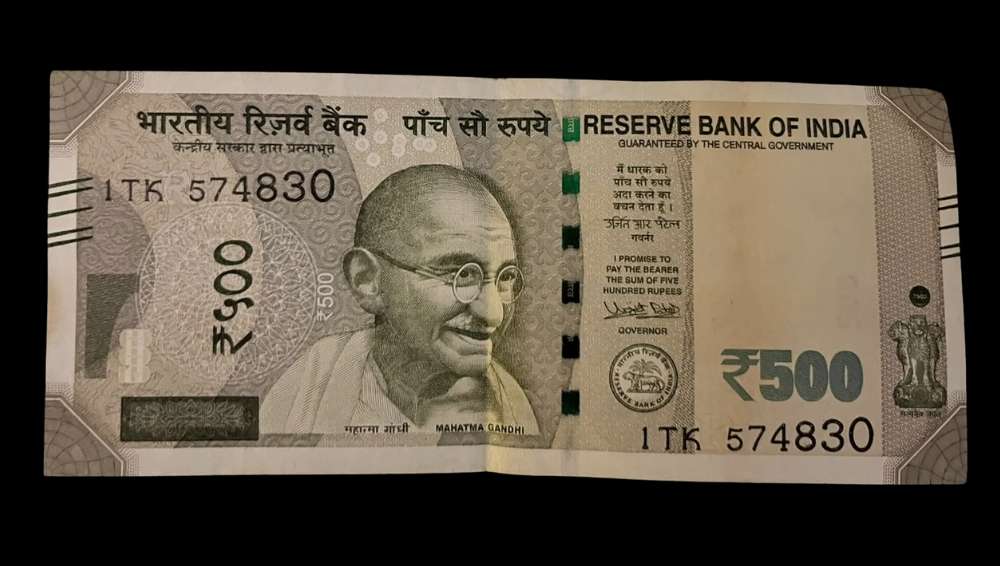
And since then it never stopped. Banknotes in circulation stood at Rs 41.23 lakh crore in March 2026, up 11.9% year-on-year. The Rs 500 note alone is 85.5% of the total value.
Now coming back to UPI. There is no doubt about the fact that UPI changed the ways Indians paid for everything. UPI went from a payments experiment to a system doing 24.07 billion transactions worth Rs 29.37 lakh crore in September 2026 – and the success of UPI and digital payments is possibly the only thing where the world look up to us.
The interesting part is the new digital payment rails grew at a phenomenal pace, alongside cash. Clearly, the two didn't move in opposite directions as the policymakers might have expected – but they moved literally parallelly.
A whole industry emerged and grew where businesses would just turn cash into digital and digital into cash – sometimes or most of the times ‘black into white’. Recently one senior banker told me that digital "democratised" scams in this country. I won't get into the crime here, but the point remains every new rail brought a new way to misuse it.
Coming to the logic behind digital push.
There has been enough stories that say that the push for digital was always about saving cost. Ofcourse, there is a cost to keep the cash alive. In FY2025-26, the RBI spent around Rs 4,875 crore printing banknotes, down from Rs 6,373 crore in the previous financial year. But printing is only one part of the cost, there is transportation and other costs. The full economic cost of cash is therefore much larger than the RBI's printing bill alone.
But at the same time, digital is not free either. Industry estimates put UPI's annual running cost at around Rs 15,000 crore.
While the two cannot be compared since there is no full details on the cost of cost, the point is both cost something. I don’t think which costs more even matters much.
Because after six years of zero charges, the government announced a 0.4% MDR on UPI payments above Rs 2,000, effective October 15. Even if bringing the MDR ‘now’ could be for entirely different reasons – but one of the reasons could be based on assumptions that since UPI is a habit now, so merchants will not mind a small fee.
Speaking from personal experience, local shopkeepers have started asking people to pay in cash – this despite telling them the fee is on above Rs 2,000 and also the rule applies from October 15. Many of them fall under the exemption and still saying “cash de do”. Some merchants have anyway long preferred cash because it gives them greater control over the timing, visibility, and avoid traceability. Now add the old tax anxiety, where digital payments leave a trail, and the fee has only introduced another layer of hesitation – that was already there.
September's numbers show no big damage yet but UPI transactions fell 1.8% month-on-month by volume and 1.5% by value. Too early to put the blame on the MDR development for this decline. October, and even November numbers will be the real test – also the festival month. Whether shopkeepers would afford to cost their business during the festivities for some cost would be worth watching.
On the other hand, the RBI's digital currency (CBDC) experiment adds yet another dimension. Retail traction has remained tepid. According to the RBI data, retail e-rupee circulation was Rs 771.7 crore on March 31, 2026, down about 24% from Rs 1,016.5 crore a year earlier. Against Rs 41 lakh crore in banknotes, that is less than 0.02%. A digital note from the RBI turned out to be a harder sell than a paper note from the RBI.
I feel the big lesson is that our relationship with cash was never about the absence of technology. Cash offers immediacy, familiarity and a degree of independence from devices, connectivity and payment infrastructure, whereas digital payments offer convenience, traceability and speed. Each solves a different set of problems, and each has costs that are sometimes invisible to the person using it.
The government and RBI have spent years encouraging people to move towards digital payments via several experiments, yet the stock of currency in circulation has continued to climb, and the economics of accepting digital money are now becoming part of the public conversation.
Policymakers can nudge, subsidize, tax and tweak, but there is enough evidence in the history of India that cash is not going to go anywhere. India may change how it pays, but the paper note with Gandhi on it refuses to lose its sheen.
--------------------------------------------------
This Week in Focus
Explainer
Apple Pay expected to go live in India today
News
RBI elevates Sudhakar malli as executive director
UPI transaction volume falls 1.8% in September after August record
Niyo FY26 income rises 78% to Rs 178 crore, net loss narrows
HDFC Bank appoints Anup Bagchi as MD & CEO
Bessemer appoints former Elevation Capital investor Mayank Khanduja as partner
Seeds Fincap raises Series B funding led by Michael & Susan Dell Foundation
Kotak Mahindra Bank names Anup Kumar Saha as MD and CEO
Moneyview shares list at 64% premium after strong IPO demand
Digital NBFCs sanction 3.4 crore personal loans worth Rs 64,656 crore in Q1 FY27
Razorpay, PayU enable Apple Pay across Indian merchant networks
Peak XV Partners announces 18 startups for new Surge cohort
WEH Ventures marks first close of Rs 250 crore third fund
Moneyview IPO subscribed 98.5x
SC leaves UPI MDR framework untouched, seeks response
Novus Loyalty to acquire 80.87% stake in AutoPe for Rs 105 crore
BlueStone investors Accel, 360 ONE sell shares worth over Rs 500 crore
ED attaches Rs 442 crore assets in RummyCulture money laundering case
AI/ Emerging tech
TDB pauses fresh applications under Rs 1 lakh crore RDI fund
Unveilr AI raises pre-seed funding from AJVC
Former executives at Epigamia, Housing.com, HAL launch deeptech startup Kokasa
Prodoc AI bags seed funding led by Thyrocare founder’s family office
SiMa.ai raises $150 million in Series C funding
Alive App raises $1 million from Powerhouse Ventures, Flipkart Ventures
IIT Madras, Unicorn India Ventures mark first close of Rs 1,000 crore deeptech fund